When your body asks for attention
People come to me with very different concerns. Osteopathy can have a supportive effect – often where tension and hardening affect everyday life.
Where does it hurt? Open the sketch
- 01
Back, neck & joints
Tension, stiffness, restricted movement, as well as radiating complaints such as nerve pain, tingling or numbness – for example from desk work, strain or earlier injuries.
- 02
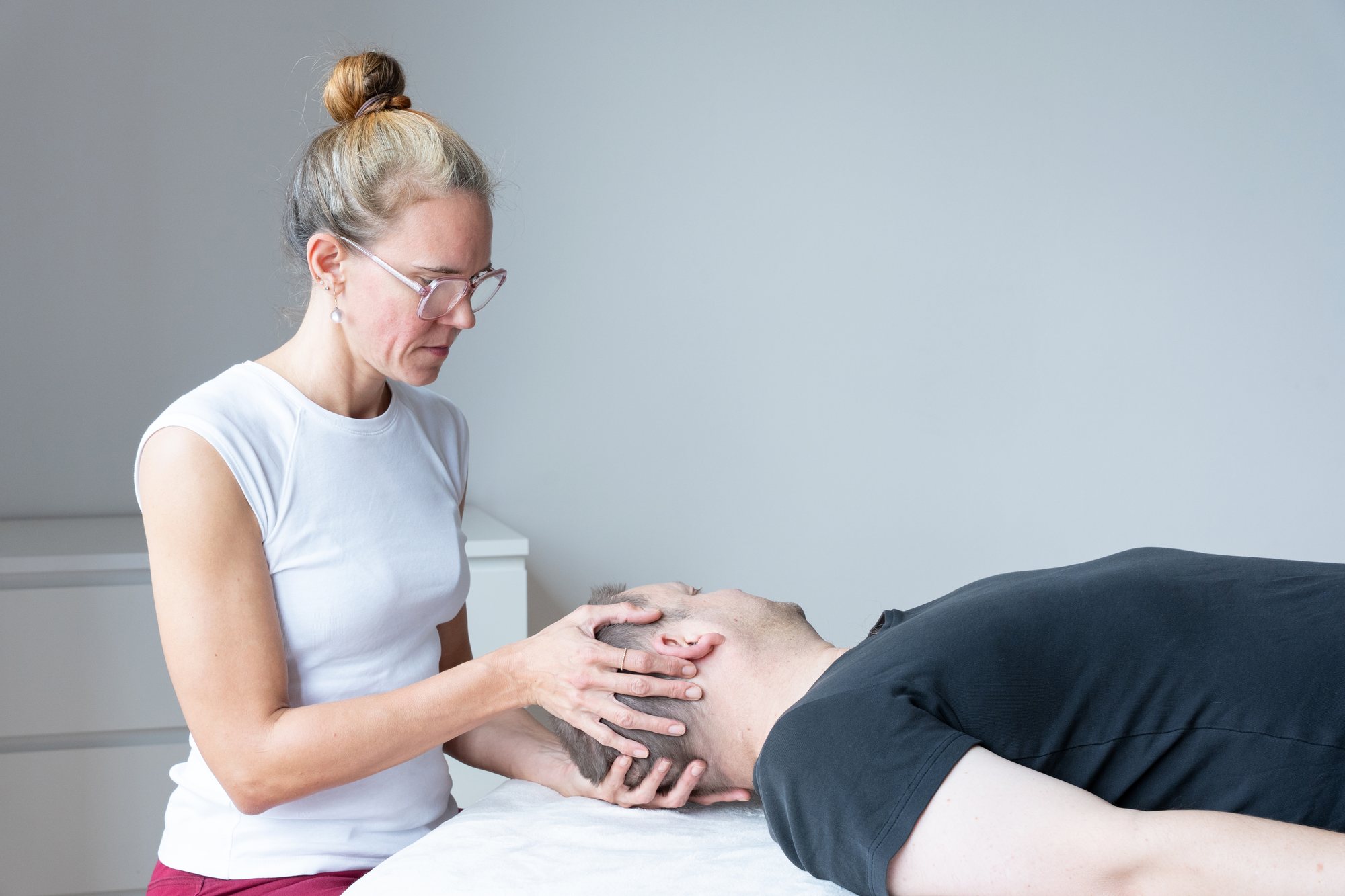
Head & tension
Tension in the jaw and neck area (e.g. teeth grinding), tension headaches, tinnitus and the feeling of being permanently “on edge”.
- 03
Abdomen & organs
Gentle work on deep-lying tissue and organ tension, e.g. for complaints in the digestive area.
- 04
Stress & exhaustion
When body and mind no longer switch off. The treatment creates space to let go and recover.
- 05
After accident, fall & surgery
Supportive after an accident, a fall, an operation or longer periods of overload – so that the body finds its balance again.
- 06
In transition
New phases of life and professional or personal changes often challenge the body too. Osteopathy can help you find solid ground under your feet again.
- 07
Cycle & women’s health
Some women experience complaints around their period: pulling pain in the lower abdomen or back, cramps, headaches, exhaustion or the feeling of not being able to think clearly.
Read moreShow less
I look at how the pelvis, lumbar spine, diaphragm and abdomen work together and where tension in the tissue might play a part. With gentle manual work I support you along the way. How complaints change is individual.
In case of very severe or suddenly new pain, very heavy bleeding or suspicion of an illness, please have it checked by a doctor first.
- 08
Is your concern missing?
Write to me or call – together we will find out whether osteopathy is right for you.
Osteopathy does not replace medical diagnosis or treatment. For acute or unclear complaints, please seek medical advice first.
Where does it hurt – and what is connected to it?
Choose an area. You will see how it connects with the rest of the body and what often goes with it.
Head & neck
Back & trunk
Shoulder, arms & legs
Organs
Knee pain – and what else I look at
If your knee hurts, I do not only examine the knee. Often this includes:
- Pelvis
- Hip
- Ankle & foot
- the other side of the body
The pelvis or hip are not automatically “the cause” – but they can be part of the biomechanical chain or of a compensation pattern and are therefore examined as well. Posture, movement habits and sometimes sleep or digestion also play a part. The question is not only: where does it hurt? But: why does the body develop this problem in exactly this place?
Examples for orientation. This is not a diagnostic tool and no substitute for medical advice.